
Table of Contents
ToggleSetting the right price for house cleaning services can make or break your business. Too low, and you’ll burn out working for peanuts. Too high, and potential clients walk away. Finding that sweet spot requires understanding your actual costs, knowing what your market will bear, and communicating why your service is worth the investment. This guide walks you through the key decisions, pricing models, overhead calculations, local market research, and tiered service structures, so you can build a sustainable cleaning business that rewards your hard work.
Key Takeaways
- Choose between hourly rates ($25–$50/hour) or per-project pricing based on your business stage; a hybrid approach combining base hourly rates for recurring clients with flat fees for deep cleans is often most effective for how to charge for house cleaning.
- Calculate true overhead costs including supplies ($3–$8 per job), transportation, equipment depreciation, and insurance, then add a 30–50% profit margin to ensure sustainable pricing.
- Research local market rates through competitor websites, platforms like HomeAdvisor, and conversations with other cleaners—rates vary 20–30% between urban and rural areas, so regional data matters more than national averages.
- Create a tiered service menu offering weekly maintenance cleans, deep cleans (30–50% premium), and specialty services like move-out cleaning to serve diverse client budgets while maximizing profit margins.
- Build trust and justify your pricing by being transparent about what’s included, highlighting your reliability and training, and offering value-adds like satisfaction guarantees or free estimates that cost little but reduce buyer hesitation.
- Never undercut your rate by more than 10–15% when starting out; excessive discounting signals desperation and attracts difficult clients, while standing confidently behind fair pricing attracts quality customers.
Understanding Your Pricing Model
Before setting a single dollar amount, decide whether you’ll charge by the hour or by the project. Each approach has trade-offs that affect how you work, what you communicate to clients, and how predictable your income becomes.
Hourly Rate vs. Per-Project Pricing
Hourly rates work well if you’re starting out or handling irregular, one-off jobs. You charge a flat rate, say, $25 to $50 per hour depending on your market, and clients know exactly what they’re paying for time on the clock. This model protects you if a job runs longer than expected, and it’s straightforward to explain.
The downside: clients see the meter running and may feel rushed, or they’ll hire whoever quotes the lowest hourly wage. You’re also capped by how many hours you can work in a day.
Per-project pricing lets you quote a flat fee for a specific scope: $200 to deep-clean a 2-bedroom apartment, $400 for a 4-bed house, or $150 for a weekly maintenance clean. Clients love knowing the exact cost upfront with no surprises. You also reward efficiency, finish early, keep the same pay.
The catch: you need experience estimating how long each job takes. Underestimate and you’ll lose money: overestimate and you price yourself out. Many successful cleaners use a hybrid: a base hourly rate for ongoing weekly or bi-weekly clients, and flat project fees for one-time deep cleans.
Calculate Your Overhead and Profit Margins
You can’t set prices in a vacuum. Real cleaning work costs money: supplies, transportation, insurance, and your own labor all add up. Start by tallying every expense.
Supplies and materials include cleaning solutions, microfiber cloths, vacuum bags, mop heads, garbage bags, and PPE like gloves and masks. Budget $3 to $8 per residential job depending on the size and whether you provide supplies or the client does. If you’re cleaning multiple homes per week, buy in bulk to trim costs.
Transportation is often overlooked. Gas, vehicle maintenance, and insurance push costs higher, especially if you’re traveling between multiple appointments. Factor in 15 to 20 minutes of drive time between jobs at your local hourly rate.
Equipment (vacuum, carpet cleaner, pressure washer, ladder) depreciates over time. Set aside a percentage of revenue, typically 5 to 10%, to replace worn-out gear.
Insurance and licensing vary by location and whether you’re a sole proprietor or employ others. In many jurisdictions, general liability insurance for a cleaning business runs $300 to $600 annually. Factor that into your hourly rate.
Once you know your true costs per job, add 30 to 50% profit margin. If a residential cleaning costs you $25 in supplies and 2 hours of labor (at $20/hour = $40 labor), your total cost is $65. A 40% margin means you charge $91 for that job. This margin covers unexpected downtime, sick days, and business growth.
Assessing Market Rates in Your Area
National averages mean nothing to your neighbor in a different state. Local competition, cost of living, and demand set the actual rates you can charge. Research ruthlessly.
Check what established cleaning companies charge in your area. Visit their websites, call for quotes, and see what they’re advertising. How much professional house cleaning costs varies widely, cities typically run 20 to 30% higher than rural areas. A $200 apartment clean in Denver might cost $280 in San Francisco.
Look at HomeAdvisor and ImproveNet for regional benchmarking data. Both platforms publish cost guides and contractor pricing surveys that break down rates by location. Use these as reference points, not gospel.
Talk to other cleaners. Join a local business group or online forum where residential cleaners share rates. You’ll learn quickly what the market bears. If competitors charge $30/hour and you’re brand new, undercutting them by $5 makes sense while you build a reputation. But underpricing by 50% signals either desperation or inexperience, clients distrust it.
Consider your unique positioning: Are you specializing in eco-friendly products, pet-owner homes, or post-construction cleaning? You can justify premium pricing. Are you a solopreneur with minimal overhead? You can compete on affordability. Match your price to your value proposition.
Creating a Tiered Service Menu
Most successful cleaners don’t offer one flat rate. Instead, they build a menu with multiple tiers so clients can choose what fits their budget and needs.
Setting Prices for Different Home Sizes and Cleaning Types
Standard cleanings (weekly or bi-weekly maintenance) typically cost the least per visit because you know the scope and can streamline the work. A $150 weekly clean for a 2-bedroom apartment scales up to $250 to $350 for a 4-bedroom house.
Deep cleans (baseboards, inside appliances, grout scrubbing, ceiling fans) take 50 to 100% longer and command 30 to 50% higher fees. A standard clean at $200 might be $300 as a deep clean.
Move-in/move-out cleans and post-construction cleaning are specialized work. Properties are empty, you can be thorough, and clients expect perfection. Price these 20 to 40% above standard rates.
Add-on services let clients customize: laundry ($25 to $50), window washing ($2 to $5 per window), carpet spot-cleaning ($10 to $25), and organizing ($30 to $50/hour). These boost your average job value without much extra overhead.
Create a simple price sheet:
- Weekly/bi-weekly maintenance: $25–$35 per hour or flat rates by home size
- Bi-annual deep clean: Flat fee based on square footage
- Move-out clean: Hourly or per-room rate (e.g., $75 per bedroom)
- Add-ons: Itemized à la carte prices
This structure lets you serve budget-conscious clients with basic weekly service while capturing higher margins from those willing to pay for deep cleans and specialty work. It also simplifies your sales conversation, clients see options and choose what they value most.
Communicating Your Value to Customers
Price is only half the equation. You also need to explain why your rate is fair and why clients should hire you instead of cutting corners themselves or hiring the cheapest quote.
Be transparent about what’s included. “Bathroom cleaning” means nothing, does that include scrubbing grout, washing mirrors, cleaning under the sink? A detailed service description prevents misunderstandings and justifies your price. Clients will pay more for clarity.
Highlight what makes you reliable: consistent scheduling, background check, insurance, professional training, or specialized skills like allergy-friendly cleaning or pet-safe products. Many homeowners will pay 10 to 20% more for someone they trust won’t steal, damage property, or use chemicals that trigger asthma.
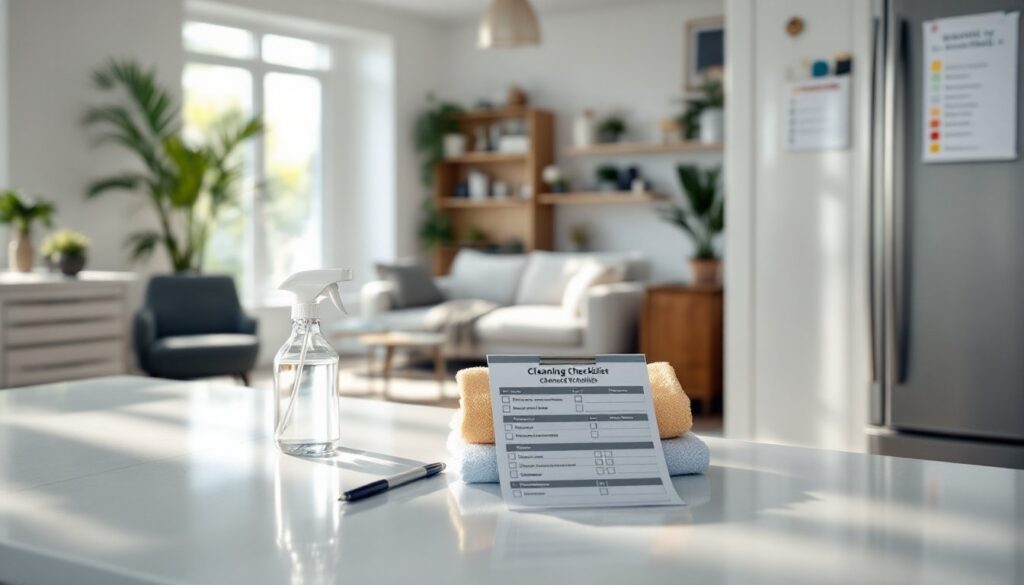
Show your system. Explain that you follow a checklist, work efficiently because you’ve done hundreds of homes, and deliver consistent results. This is especially powerful when discussing best practices, positioning yourself as knowledgeable, not just cheap labor.
Offer value-adds that cost you little but mean a lot to clients: a free estimate, a 24-hour cancellation policy, or a “satisfaction guarantee” where you return at no charge if the job doesn’t meet expectations. These reduce buyer hesitation and justify premium pricing.
Finally, don’t apologize for your rate. If you’ve calculated it fairly, you’ve researched the market, and you deliver good work, stand by your number. Clients who haggle over $20 are often trouble: clients who invest in quality rarely are.