Table of Contents
ToggleA clean house doesn’t happen by accident, it happens by system. Whether you’re juggling work, family, and hobbies, a structured cleaning checklist template keeps your home from spiraling while you’re busy living in it. The difference between a home that feels manageable and one that feels overwhelming often comes down to knowing exactly what needs doing, when, and in what order. This guide walks you through building a practical cleaning checklist template tailored to your home and schedule, with daily, weekly, monthly, and seasonal tasks organized so nothing slips through the cracks.
Key Takeaways
- A structured house cleaning checklist template eliminates decision fatigue and transforms cleaning from an overwhelming task into manageable daily, weekly, and monthly routines.
- Daily cleaning tasks (15-30 minutes) prevent grime buildup and maintain freshness, while weekly deep cleans targeting one or two rooms prevent the need for costly professional services.
- Monthly and seasonal maintenance—like cleaning HVAC filters, descaling appliances, and inspecting gutters—prevents expensive home damage and extends the life of your systems.
- Customize your cleaning checklist template by household size, pets, home square footage, and rental vs. owned status to ensure it’s realistic and sustainable for your lifestyle.
- Use a simple tracking system like a paper checklist, spreadsheet, or app to maintain consistency, and review your template quarterly to keep it aligned with what actually works for your home.
Why A Structured Cleaning Checklist Matters
A cleaning checklist template is more than a to-do list, it’s a mental weight off your shoulders. Without one, you’re either under-cleaning and living in grime, or over-cleaning and burning out. A good checklist eliminates decision fatigue. You wake up knowing exactly what needs doing today, this week, and this month.
Structured cleaning also prevents costly damage. Regular dust removal keeps HVAC systems from clogging. Routine gutter cleaning prevents water damage and foundation problems. Seasonal checks catch mold, pest issues, and deteriorating seals before they become expensive repairs. Think of your checklist as preventive maintenance for your home.
Psychologically, checking off tasks builds momentum and a sense of control. Small wins, vacuuming the bedroom, scrubbing the kitchen sink, create visible progress that motivates you to keep going. Over time, a checklist system transforms cleaning from a dreaded marathon into manageable daily and weekly sprints.
Daily Cleaning Tasks That Keep Your Home Fresh
Daily tasks are the baseline, they take 15 to 30 minutes and prevent grime buildup. These aren’t deep cleans: they’re maintenance.
Daily cleaning essentials:
• Make beds (all of them: takes two minutes and resets the bedroom)
• Wash dishes or load the dishwasher: wipe the stovetop
• Quick sweep or vacuum high-traffic areas (kitchen, entryway, main hallway)
• Wipe down bathroom sink and countertop
• Clear clutter from living spaces (pile items back where they belong)
• Spot-clean spills on counters and floors immediately
• Run a load of laundry
Keep cleaning supplies in each major room, kitchen, bathrooms, bedroom, so you’re not hunting for spray bottles and cloths. A microfiber cloth and basic all-purpose cleaner handle 80 percent of daily wipe-downs. Don’t overcommit here: the goal is to prevent dirt from settling in, not to restore shine. House Cleaning Hacks: Transform Chores into Fun and Effective Strategies offers creative approaches to keep daily routines from feeling repetitive.
Consistency beats perfection. If you miss a day, you’re not failing, you’re just resetting tomorrow.
Weekly Deep Cleaning Priorities
Weekly deep cleaning targets one or two rooms at a time rather than the whole house. This approach keeps the workload realistic and prevents burnout.
Sample weekly rotation:
• Monday: Kitchen and dining room – Wipe cabinets, scrub inside the microwave, clean under appliances, mop floors
• Tuesday: Bathrooms – Scrub toilets, tubs, and shower tiles: clean mirrors: replace towels
• Wednesday: Bedrooms – Change sheets, dust surfaces, vacuum under the bed, wipe light switches
• Thursday: Living areas – Dust furniture, baseboards, and shelves: vacuum or mop thoroughly
• Friday: Entryway and laundry – Sweep and mop entry tiles, fold accumulated laundry
• Saturday or Sunday: Flexible – Catch whatever was missed or handle bonus tasks (windows, door handles, light fixtures)
Take time during the weekly clean to spot hazards, loose tile, water stains, pest droppings, and note them for repair. Real Simple’s cleaning checklists for every room break tasks down by room if you want reference-level detail. The key is preventing dirt from accumulating to the point where you need a professional deep clean every month. Invest in basic equipment: a good mop, a toilet brush, a stiff-bristled grout brush, and gloves that fit properly so your hands don’t prune.
Monthly And Seasonal Maintenance Tasks
Monthly tasks go beyond visible cleanliness, they address air quality, water flow, and structural care.
Monthly checklist items:
• Clean refrigerator coils and interior deep clean
• Descale kettles and coffee makers
• Wash window blinds or dust them thoroughly
• Scrub grout lines in bathrooms and kitchen
• Clean behind and under major appliances
• Wipe down ceiling fans (they collect dust constantly)
• Check and replace HVAC filters if needed
• Inspect baseboards and touch up scuffs
Seasonal tasks (quarterly focus):
• Spring: Power wash siding, clean gutters, wash exterior windows, replace outdoor hardware seals
• Summer: Deep clean deck or patio, check for pest entry points, verify that window screens fit tightly
• Fall: Final gutter clean before winter, weatherstrip doors and windows, inspect caulk around pipes and exterior seals
• Winter: Deep clean interior windows, organize closets, wipe down light fixtures, check under sinks for leaks
The Spruce and similar resources provide detailed seasonal task lists specific to your climate. Seasonal maintenance prevents small problems from becoming expensive ones. A clogged gutter in fall can lead to ice damming and interior water damage by January. A loose weatherstrip in summer means air conditioning costs spike in August.
Schedule these larger tasks during weekends or a day off. Some jobs, like power washing siding or deep cleaning gutters, benefit from a second set of hands or professional equipment rental.
How To Customize Your Checklist For Your Lifestyle
Not every home needs the same checklist. A busy parent of three won’t use the same schedule as a retired couple, and a rental requires different attention than a home you own.
Adjust by household size: More people means more laundry, dishes, and foot traffic. Add extra quick-tidy sessions. Fewer people might mean you skip the Monday kitchen deep clean if you cook light.
Adjust by pets: Pet owners need weekly vacuuming in shedding season, monthly enzymatic bathroom treatments to prevent smell buildup, and more frequent spot-cleaning. Non-pet households can skip these steps.
Adjust by home size: A 1,500-square-foot house needs less floor time than a 4,000-square-foot one. Be realistic about what one person can accomplish in a weekend.
Adjust by health or mobility: If stairs are difficult, consolidate upstairs tasks into one session. If allergies are a concern, prioritize HVAC filter changes and dust removal in bedrooms.
Adjust by rental vs. owned: Renters focus on appearance and preventing damage claims. Owners can invest time in preventive maintenance that extends the life of appliances and systems.
Write your checklist on paper or in a notes app, and tweak it monthly based on what actually works. Martha Stewart’s house cleaning checklist provides a comprehensive template you can adapt by deleting tasks that don’t apply to your situation. The best checklist is one you’ll actually follow.
Tools And Systems To Track Your Progress
The checklist itself is only half the battle. You also need a system to track progress without adding overhead.
Tracking methods:
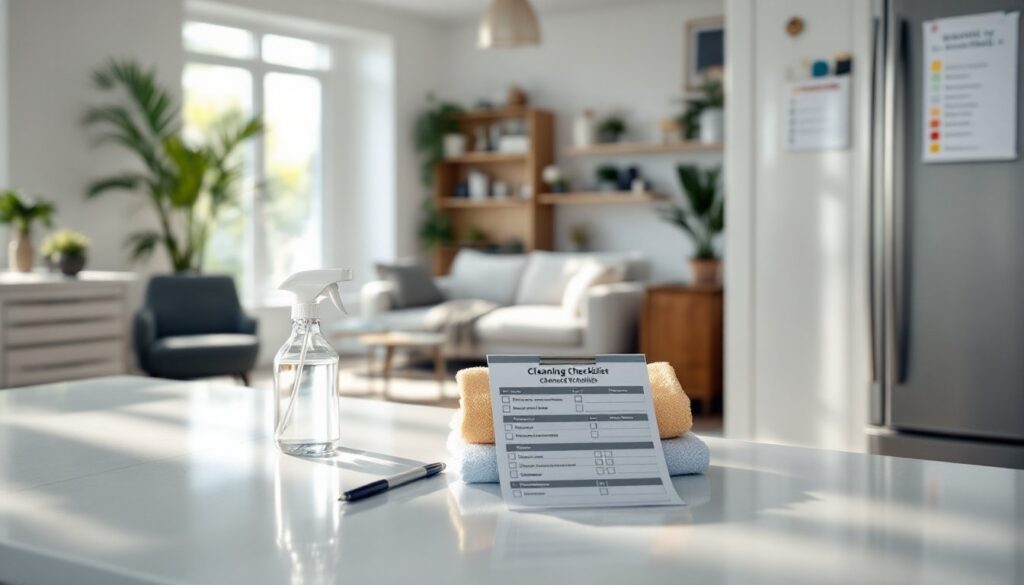
• Paper checklist: Print a weekly template and hang it on the fridge with a pen. Cross off tasks as you complete them. Simple and satisfying.
• Spreadsheet: Use Google Sheets or Excel. Create columns for each week or month, with task rows. Share it with household members if needed.
• Apps: Todoist, Trello, or generic to-do apps let you set recurring tasks and get notifications. Overkill for some, perfect for others.
• Whiteboard: A dry-erase board in the kitchen lets anyone add or check off tasks. Works well for multi-person households.
Pro tips for consistency:
Schedule cleaning at the same time each week. Tuesday morning cleaning becomes habit, not a decision you make Tuesday morning.
Bundle tasks by location: do all bathrooms at once rather than bouncing between rooms. It’s faster and keeps you in the right mindset.
Set a timer for 20 or 30 minutes and work intensely rather than spreading tasks across a long, exhausting day. Breaks between sessions keep you fresh.
Involve household members. Kids can handle age-appropriate tasks like wiping baseboards or loading the dishwasher. Adults in the home should know what the weekly plan is.
Review your checklist quarterly. What’s working? What’s been ignored for three months straight? Delete the latter and refine the former. A checklist that doesn’t reflect reality gets abandoned fast.
Conclusion
A house cleaning checklist template transforms an overwhelming mountain of work into manageable daily and weekly tasks. Daily maintenance prevents buildup, weekly deep cleans keep your home genuinely clean, and monthly and seasonal tasks protect your home’s systems and structure. The best template is one you’ve customized to fit your life, tracked consistently, and refined over time. Start simple, add what works, and drop what doesn’t. Your future self, the one who comes home to a clean, organized house, will thank you.